The Long Read
Gerda turns to television advertising to reach new door buying audience

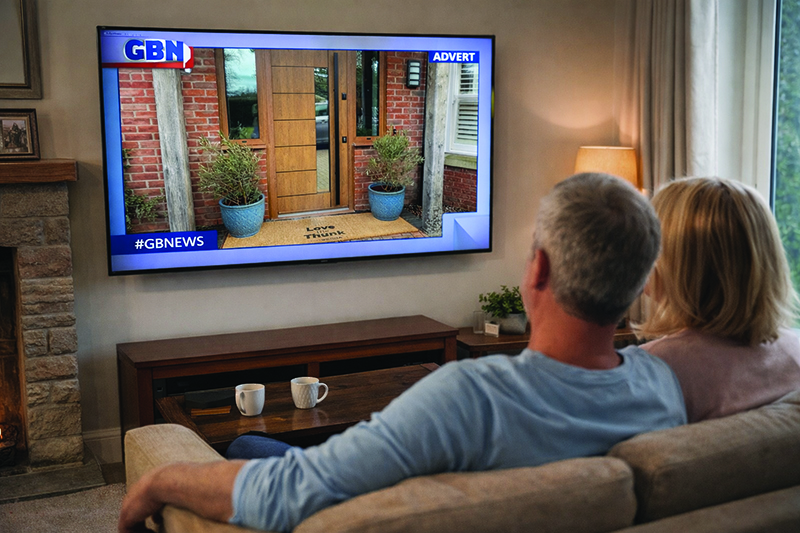
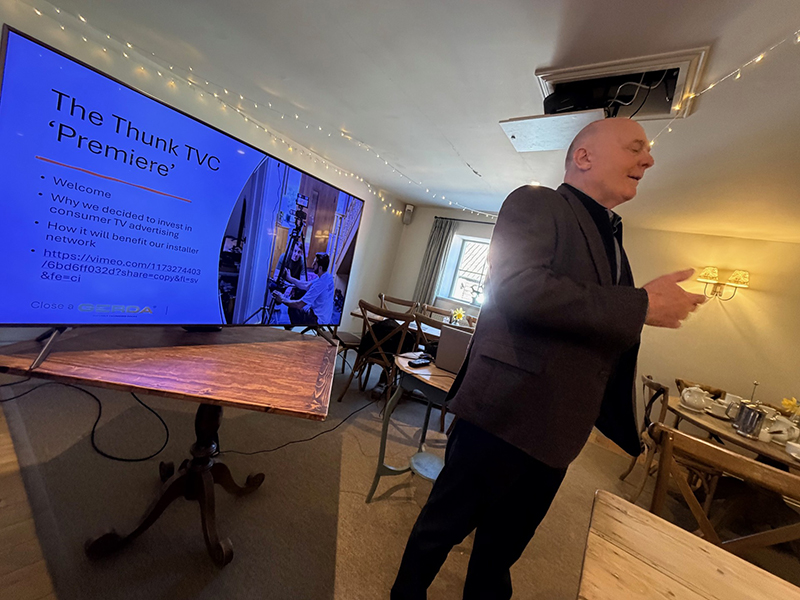
The decision by Gerda to take to national television marks a notable departure from the glazing sector’s usual marketing playbook, with the company betting that a broader consumer audience will ultimately drive demand through its installer network.
At the launch of its new campaign on GB News, Danny Williams set out a rationale rooted less in brand vanity and more in practical sales outcomes. The aim, he said, is to support fabricators and installers by helping them win and retain customers who might otherwise remain out of reach.
“We’re stepping into a different type of market,” he said. “It’s about assisting our downstream partners to retain more clients and attract more enlightened customers.”
For all the industry’s investment in digital channels, Williams believes there remains a sizeable audience that has yet to be properly engaged. Social media, online advertising, print media and e-commerce platforms all have their place, but they do not capture everyone. Television, in his view, offers a way of bridging that gap and prompting consumers to begin their buying journey with a clearer idea of what they want.
Deliberate focus on audience profile
The choice of GB News reflects a deliberate focus on audience profile. Williams pointed to the channel’s appeal among older homeowners, a group more likely to be considering significant home improvements and less inclined to make purely price-driven decisions. Crucially, he also noted that advertising rates remain competitive, making the move more viable than many in the sector might assume.
There is, however, no fixed commitment to the campaign’s duration. “If it works, you carry on doing it,” he said, capturing a straightforward approach that prioritises results over long-term media planning.
Measuring those results is central to the strategy. Rather than relying on broad estimates of brand awareness, Gerda has put in place a system designed to track enquiries from first contact through to distribution among its dealer network. Viewers who respond to the advert are directed to the company’s website, where a configurator and enquiry process feed into a central dashboard.

This allows the business to monitor traffic levels and, more importantly, to ask customers directly how they heard about the product. The intention is to build a clear picture of how effectively the campaign is converting interest into tangible leads.
Williams suggested that experiences from other advertisers on the channel had helped shape expectations. In some cases, he said, companies had generated more leads than anticipated, forcing them to expand capacity or even launch new brands to handle the volume.
Demand is channelled efficiently
For Gerda, the emphasis is slightly different. With an established dealer network already in place, the task is to ensure that demand is channelled efficiently to partners who can convert it into sales. The campaign is therefore as much about reinforcing those relationships as it is about attracting new customers.
Underlying the move is a firm belief in the continued importance of the showroom. Williams argued that premium products such as entrance doors are rarely bought on impulse or on price alone. Customers want to see, touch and experience the product before committing.
“If you can drive people to a showroom, they can feel the difference,” he said, adding that serious buyers are unlikely to rely solely on online images when making a purchase of this scale.
That reflects a broader view of the front door as a defining feature of the home rather than a functional afterthought. It is, as Williams put it, “the face” of the property, shaping first impressions for visitors and owners alike.
The campaign also signals a clear move away from the lower end of the composite door market, which he described as prone to service issues and inconsistent performance. By contrast, Gerda is positioning its offer firmly at the premium end, supported by marketing that speaks directly to the homeowner.
In that sense, the television campaign is more than an experiment. It represents a shift in how demand may be generated in the sector, with manufacturers taking a more active role in influencing consumer choice before the installer ever becomes involved.
If the approach delivers the results Williams expects, it may not be long before others begin to follow suit. FOR MORE DETAILS CLICK HERE